
Sustainable tea farming plays a vital role in preserving the delicate ecosystems of the Cameron Highlands, where cool climates, fertile soils, and high-altitude conditions create an ideal environment for tea cultivation. As global awareness of environmental impact continues to grow, the way tea is produced has become increasingly important to consumers, producers, and communities alike.
In Malaysia, the legacy of tea cultivation is closely tied to the highlands, where generations of growers have refined practices that balance agricultural productivity with environmental responsibility. Sustainable tea farming in this region reflects a long-term commitment to protecting natural resources while maintaining the quality and character of the tea itself.
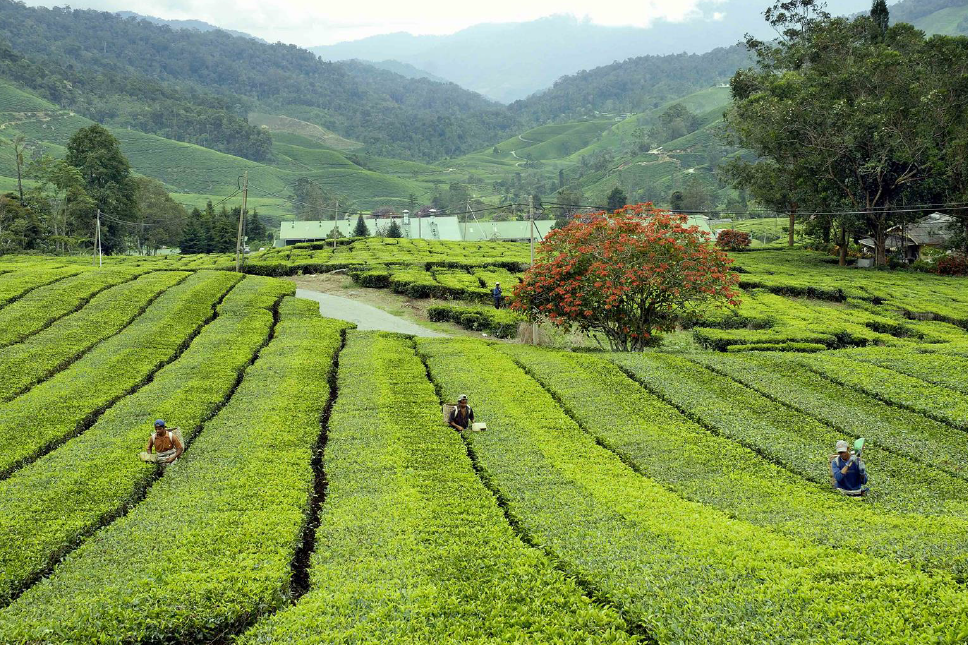
The Cameron Highlands has supported tea cultivation since the early twentieth century, with its unique geography shaping how tea is grown. The region’s rolling slopes, consistent rainfall, and mildly acidic soil contribute to the distinctive flavour profiles of highland teas, while also requiring careful land management to prevent erosion and environmental degradation.
Sustainable tea farming in this landscape involves working with the natural terrain rather than altering it extensively. This approach includes maintaining existing plantation boundaries and avoiding unnecessary land expansion, which helps preserve surrounding forests and biodiversity. In fact, long-standing practices in the region have ensured that plantation areas remain stable over time, reducing pressure on natural habitats.
By respecting the natural characteristics of the highlands, tea producers are able to cultivate crops in a way that aligns with the environment, ensuring that the land remains productive for future generations.
Sustainable Tea Farming with Integrated Pest Management (IPM)
A key component of sustainable tea farming is the use of Integrated Pest Management, often referred to as IPM. This approach focuses on managing pests through a combination of cultural, biological, and carefully controlled chemical methods, rather than relying solely on pesticides.
in practice, IPM begins with understanding the natural behaviour of pests and the conditions that encourage their growth. Farmers use techniques such as adjusting harvesting cycles, monitoring pest levels, and maintaining healthy plant conditions to reduce the likelihood of infestations. Cultural methods, including early plucking of tea leaves, can interrupt pest life cycles and limit their spread.
Biological solutions also play an important role. Beneficial organisms are introduced or supported to naturally control harmful pests, while organic treatments help maintain soil health and plant resilience. These methods reduce the need for chemical interventions and support a balanced ecosystem within the plantation.
Through IPM, sustainable tea farming becomes a holistic process that protects both the crop and the wider environment.
Soil Health and Regenerative Practices
Healthy soil forms the foundation of sustainable tea farming, particularly in highland environments where soil stability is essential. In the Cameron Highlands, soil management practices focus on maintaining fertility, structure, and microbial activity over the long term.
Tea waste and plant residues are often recycled back into the soil as compost, returning nutrients to the soil and reducing reliance on synthetic inputs. This approach supports a natural nutrient cycle, which helps maintain consistent crop quality.
Biological treatments, such as beneficial fungi, are also used to strengthen root systems and protect plants from disease. These natural solutions enhance the soil’s ability to support healthy tea bushes while reducing the need for chemical treatments.
By prioritising soil health, sustainable tea farming ensures that the land remains fertile and resilient, supporting both current production and future cultivation.
Preserving Biodiversity Through Responsible Land Use
Sustainable tea farming in the Cameron Highlands is closely linked to biodiversity conservation. The surrounding forests, waterways, and natural habitats are essential to maintaining ecological balance, and responsible land use helps protect these systems.
A significant portion of highland estates is preserved as forested areas, which provide habitat for native flora and fauna while also supporting soil stability and water regulation. These preserved zones act as natural buffers, reducing the impact of agricultural activities on the wider environment.
Maintaining biodiversity also contributes to the effectiveness of sustainable farming practices. Natural predators help control pest populations, while diverse plant life supports pollinators and improves ecosystem resilience.
By integrating conservation into plantation management, sustainable tea farming becomes part of a broader environmental stewardship effort, ensuring that agricultural activity coexists with the natural landscape.
BOH’s Approach to Sustainable Tea Farming
The principles of sustainable tea farming are reflected in the practices adopted across BOH’s estates in the Cameron Highlands. With a history spanning decades, the approach has consistently focused on balancing productivity with environmental responsibility.
Integrated Pest Management is applied to reduce reliance on chemicals while maintaining crop health, and soil management practices emphasise organic inputs and long-term fertility. At the same time, land use policies prioritise conservation, with large areas set aside to preserve forest ecosystems and biodiversity.
This approach extends beyond the fields, influencing how tea is processed, packaged, and shared with consumers. Sustainability is viewed as an ongoing commitment, shaped by both heritage and evolving environmental understanding.
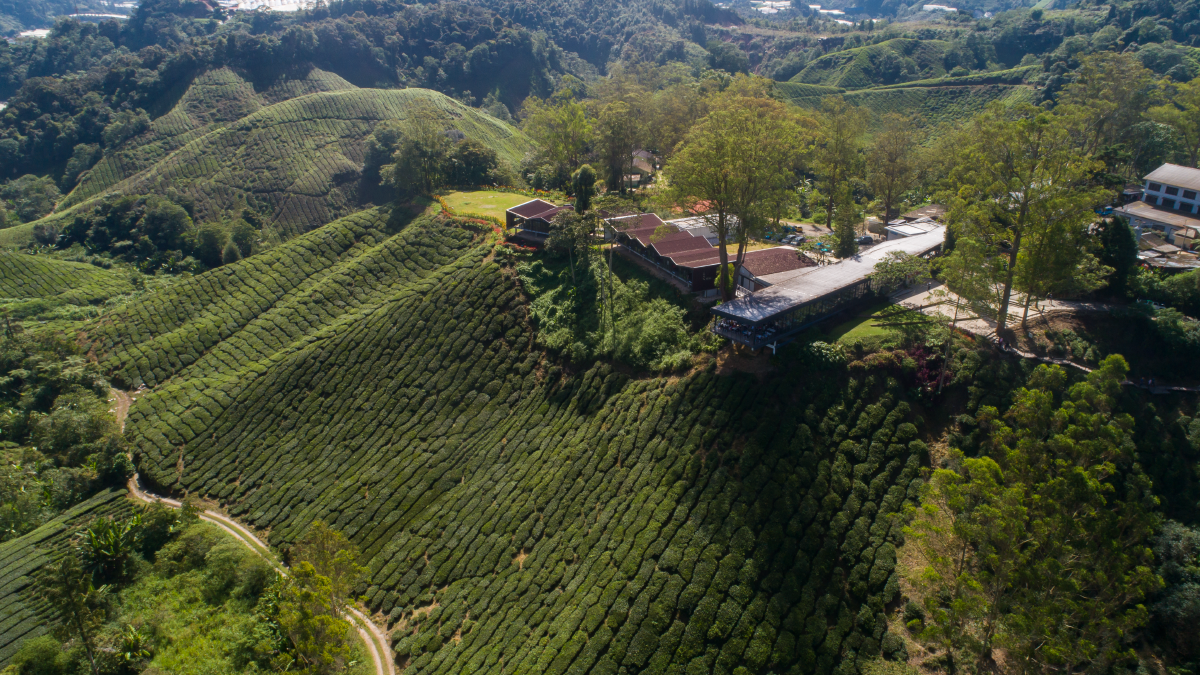
Sustainable tea farming in the Cameron Highlands represents a thoughtful balance between agriculture and environmental care. Through practices such as Integrated Pest Management, soil regeneration, and responsible land use, tea producers are able to cultivate high-quality crops while protecting the ecosystems that support them.
These methods reflect a broader understanding that sustainability is not a single action, but a continuous process of adaptation and stewardship. As consumers become more aware of how their choices impact the environment, sustainable tea farming offers a meaningful connection between the cup of tea and the landscape from which it originates.
In the Cameron Highlands, this connection continues to shape the future of tea, ensuring that both the land and its traditions are preserved for generations to come.
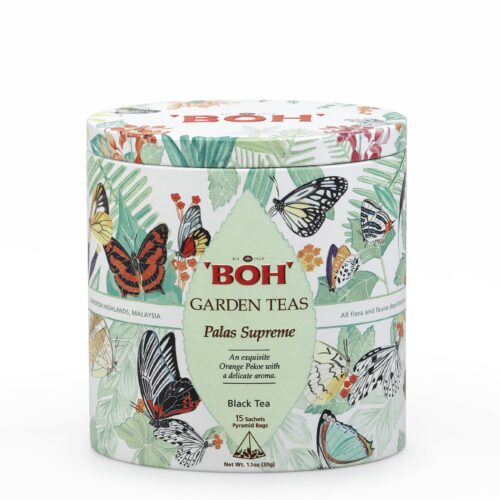
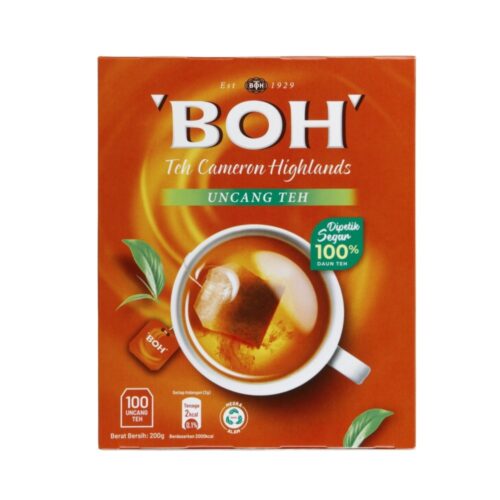
If you are in the mood for some tea check out some of our selection below, or click here to explore our wider selection of teas:

Share this post:
| Cookie | Duration | Description |
|---|---|---|
| ServerPool | session | This cookie is set by the provider Tripadvisor. This cookie is used for user tracking and viewing embedded contents from TripAdvisor like payment of referral commission fees etc. |
| TASSK | 5 months 27 days | This cookie is set by the provider Tripadvisor. This cookie is used for viewing embedded contents to the visitor from Tripadvisor. It also helps to know whether the visitor had clicked on the advertisement, to collect payment from the Tripadvisor. |
| TATravelInfo | 14 days | This cookie is set by the provider Tripadvisor. This cookie is used for viewing contents and ads from Tripadvisor, which in return helps to earn money from Tripadvisor if the visitor has clicked the ads. |
| Cookie | Duration | Description |
|---|---|---|
| __kla_id | 1 year 1 month 4 days | Klaviyo sets this cookie to collect information on the visitor’s behavior. This information is used for internal analytics and to optimise the website. It also registers if the visitor has subscribed to a news letter. |
| _fbp | 3 months | Facebook sets this cookie to display advertisements when either on Facebook or on a digital platform powered by Facebook advertising after visiting the website. |
| _ga | 1 year 1 month 4 days | Google Analytics sets this cookie to calculate visitor, session and campaign data and track site usage for the site's analytics report. The cookie stores information anonymously and assigns a randomly generated number to recognise unique visitors. |
| _ga_* | 1 year 1 month 4 days | Google Analytics sets this cookie to store and count page views. |
| CONSENT | 2 years | YouTube sets this cookie via embedded YouTube videos and registers anonymous statistical data. |
| TADCID | 10 years | Tripadvisor sets this cookie to store a unique ID for users, to help them view embedded content from Tripadvisor. |
| TASession | session | TripAdvisor sets this cookie to track visitors across websites. |
| TAUnique | 2 years | TripAdvisor sets this cookie to track visitors across websites. |
| Cookie | Duration | Description |
|---|---|---|
| fr | 3 months | Facebook sets this cookie to show relevant advertisements by tracking user behaviour across the web, on sites with Facebook pixel or Facebook social plugin. |
| IDE | 1 year 24 days | Google DoubleClick IDE cookies store information about how the user uses the website to present them with relevant ads according to the user profile. |
| SRT | 30 minutes | This cookie is set by the provider Tripadvisor. This is a Tripadvisor session cookie used for advertising purposes. |
| TACds | 2 months | This cookie is set by the provider TripAdvisor. This cookie is used for showing travel information and ads based on the user preferences. |
| TART | 5 days | This cookie is set by the provider Tripadvisor. This cookie is used for viewing contents and ads from Tripadvisor, which in return helps to earn money from Tripadvisor if the visitor has clicked the ads. |
| TAUD | 14 days | This cookie is set by the provider Tripadvisor. This is Tripadvisor session cookie used for advertising purposes. |
| test_cookie | 15 minutes | doubleclick.net sets this cookie to determine if the user's browser supports cookies. |
| ttwid | 1 year | Tiktok sets this cookie to keep track of user authentication and session information. |
| VISITOR_INFO1_LIVE | 5 months 27 days | YouTube sets this cookie to measure bandwidth, determining whether the user gets the new or old player interface. |
| YSC | session | Youtube sets this cookie to track the views of embedded videos on Youtube pages. |
| yt-remote-connected-devices | never | YouTube sets this cookie to store the user's video preferences using embedded YouTube videos. |
| yt-remote-device-id | never | YouTube sets this cookie to store the user's video preferences using embedded YouTube videos. |
| yt.innertube::nextId | never | YouTube sets this cookie to register a unique ID to store data on what videos from YouTube the user has seen. |
| yt.innertube::requests | never | YouTube sets this cookie to register a unique ID to store data on what videos from YouTube the user has seen. |
| Cookie | Duration | Description |
|---|---|---|
| __vt | 1 hour | Description is currently not available. |
| msToken | 10 days | Description is currently not available. |
| PMC | 2 years | Description is currently not available. |
| TASID | 30 minutes | Description is currently not available. |